Sunset on the Mossel River
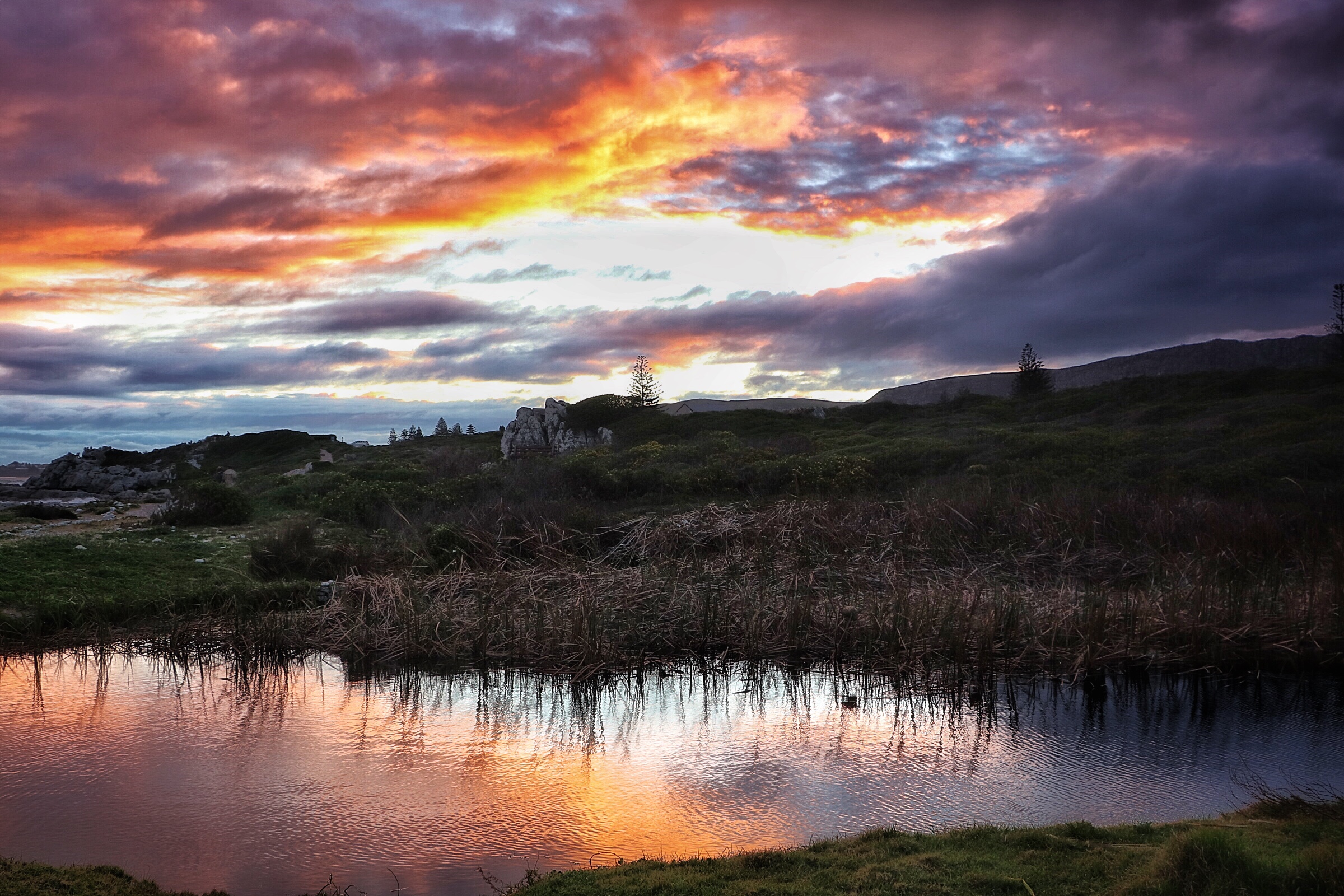
Playing with shutter speed on tonight’s Cliff Path Walk.
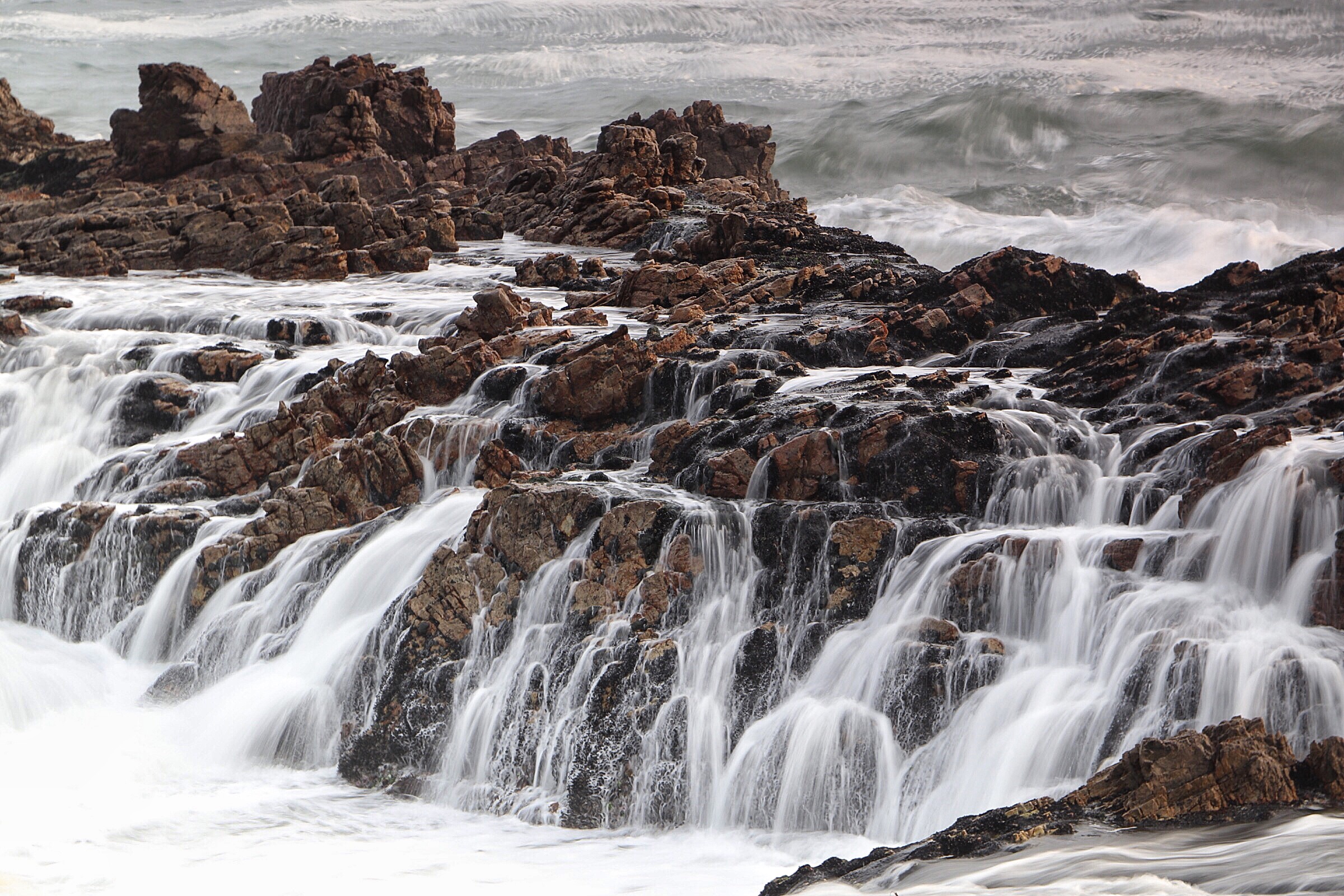


Sundews are found on almost every continent except Antartica. One of the largest genera of plants that has at least 194 species. They are carnivorous, luring, capturing and digesting insects by using their mucilaginous glands that cover their leaf surfaces. The insects supplement their mineral nutrients allowing them to grow in very poor soil. This example of Drosera Glabripes was photographed in the Fernkloof Nature Reserve in Hermanus.
Since they are easy plants to cultivate, unique in appearance and carnivorous as well, these plants are popular ornamental plants, and have spread all over the world. Unfortunately in some areas they thrived and are considered a pest. In their natural habitat many species of these unique and widespread plants are under threat.
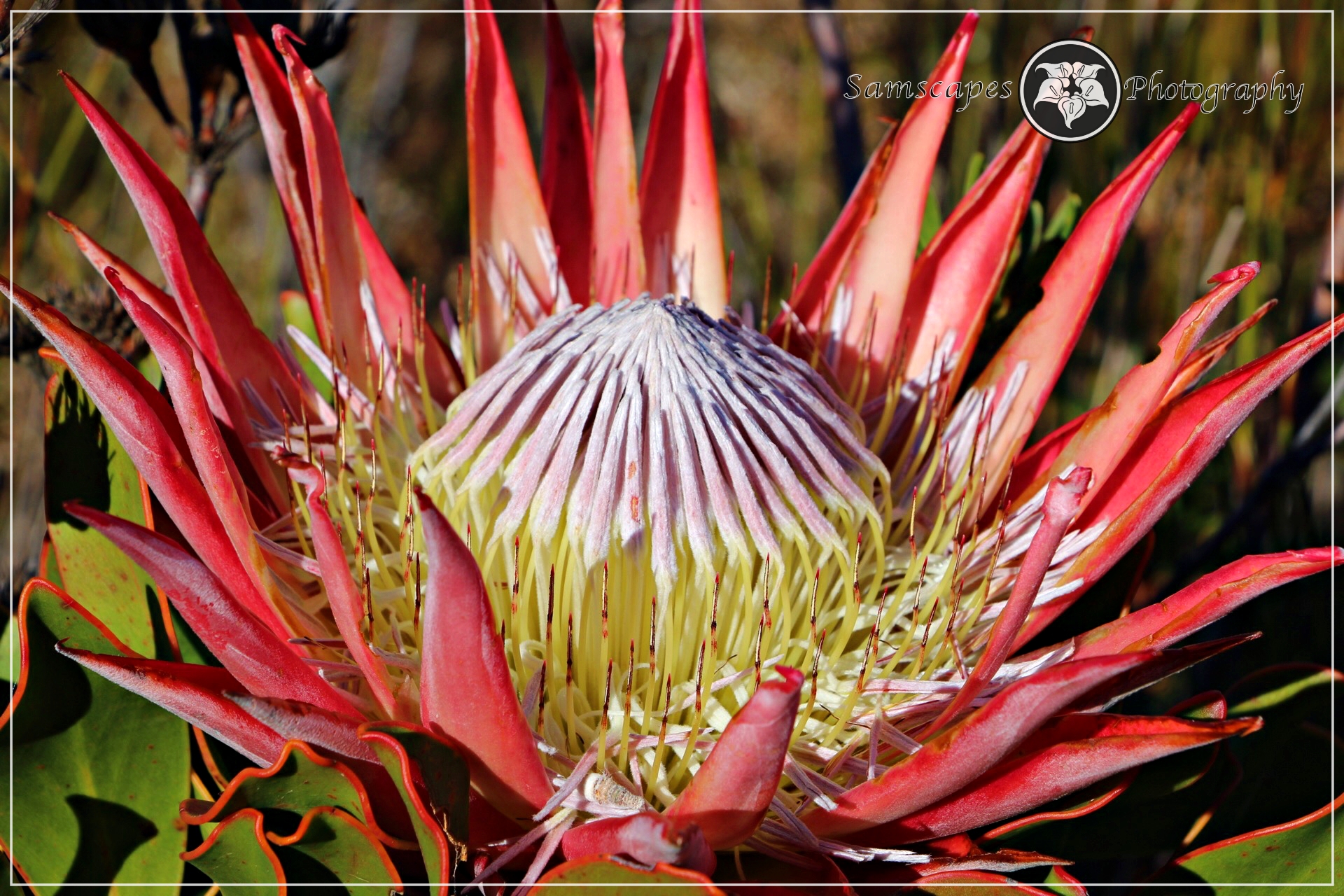
This member of the protea family has the largest flowering head in the genus. It is also the National Flower of the Republic of South Africa. This plant has several forms and colours. It also comes in a creamy yellow colour. This plant is fire adapted, having an underground stem that contains many dormant buds. These will produce the new growth after a fire.
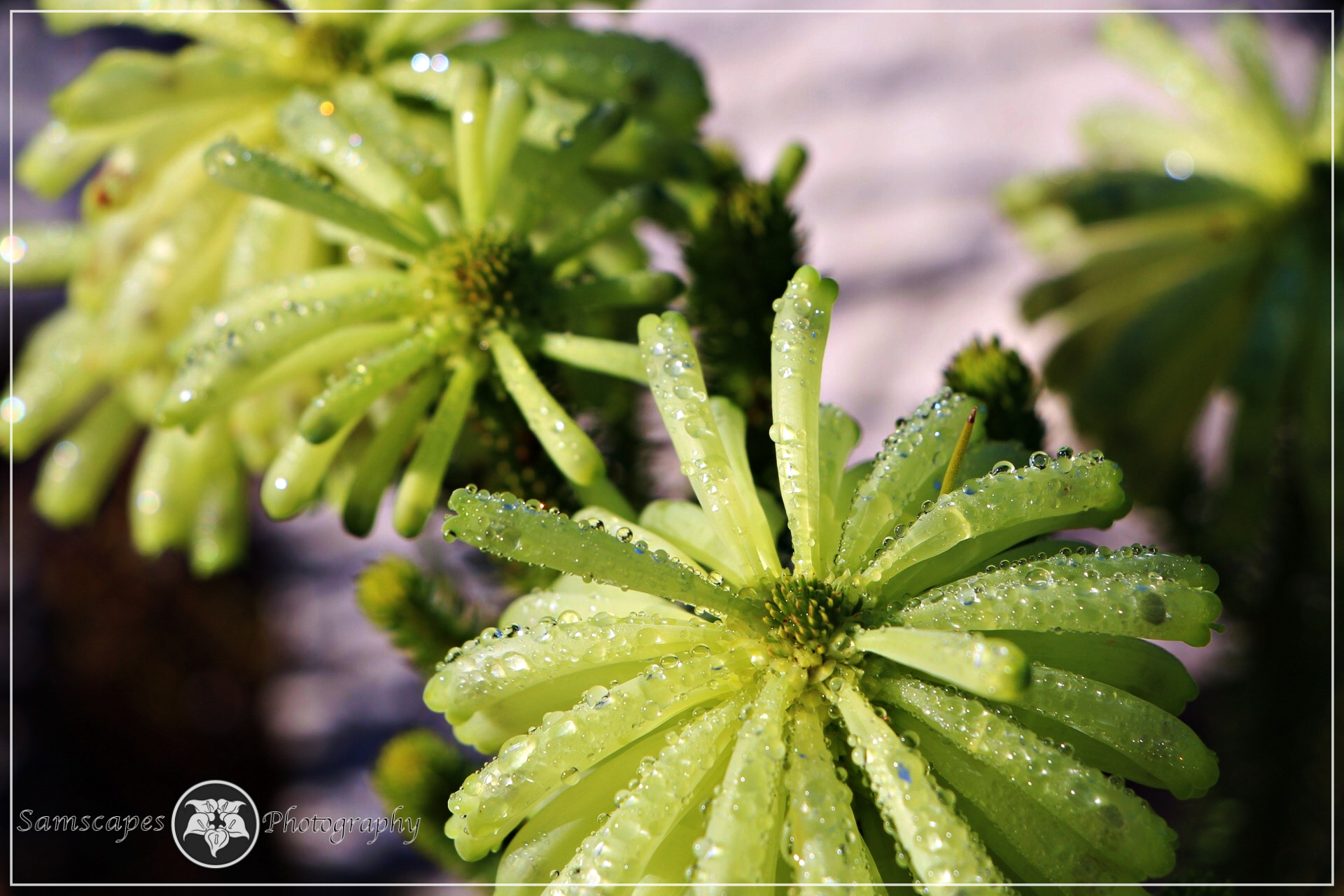
This plant is hard to miss as it flowers all year. This Erica is unique in that it has knobby protuberances on the stems below the flowers. It is not a fungus but the seed capsules that remain on the plant for many years. When flowering is over the sepals remain, growing larger and become hard and fleshy, protecting the ovaries with their developing seeds inside. The fruiting heads are yellowish green.
The sessiliflora can retain its seeds for up to seven years and propagates after a veld fire. Many fynbos store their seeds on the bush for many years but this is the only Erica to do so.
This plants habitat is on mountain slopes in damp, moist places. It likes seepage areas and can be seen growing near streams, or where there is a lot of water run off.
The key pollinators of this flower are birds, insects and wind. Erica sessiliflora is especially liked by sunbirds. The sunbird inserts its long curved beak into the long tubular flower stalks and extracts the nectar at the base. In doing so the beak comes into contact with the pollen on the anthers, positioned in the mouth of the flower. This pollen is then transferred to the stigma of another flower.
The genus Erica comprises of 860 species of which 770 are native to the Western and Eastern Cape of South Africa.
We saw a lot of these Erica on our hike https://samscapesphotography.co.za/fernkloof-nature-reserve-hike-with-paula/
Common name – Hermanus Pin Cushion or Trailing Pin Cushion.

This plant from the family Proteaceae is a low spreading shrub. It has reddish flowering stems and oblong leaves. It flowers from July to October.
We saw this pin cushion on the hike we did in this post https://samscapesphotography.co.za/fernkloof-nature-reserve-hike-with-paula/
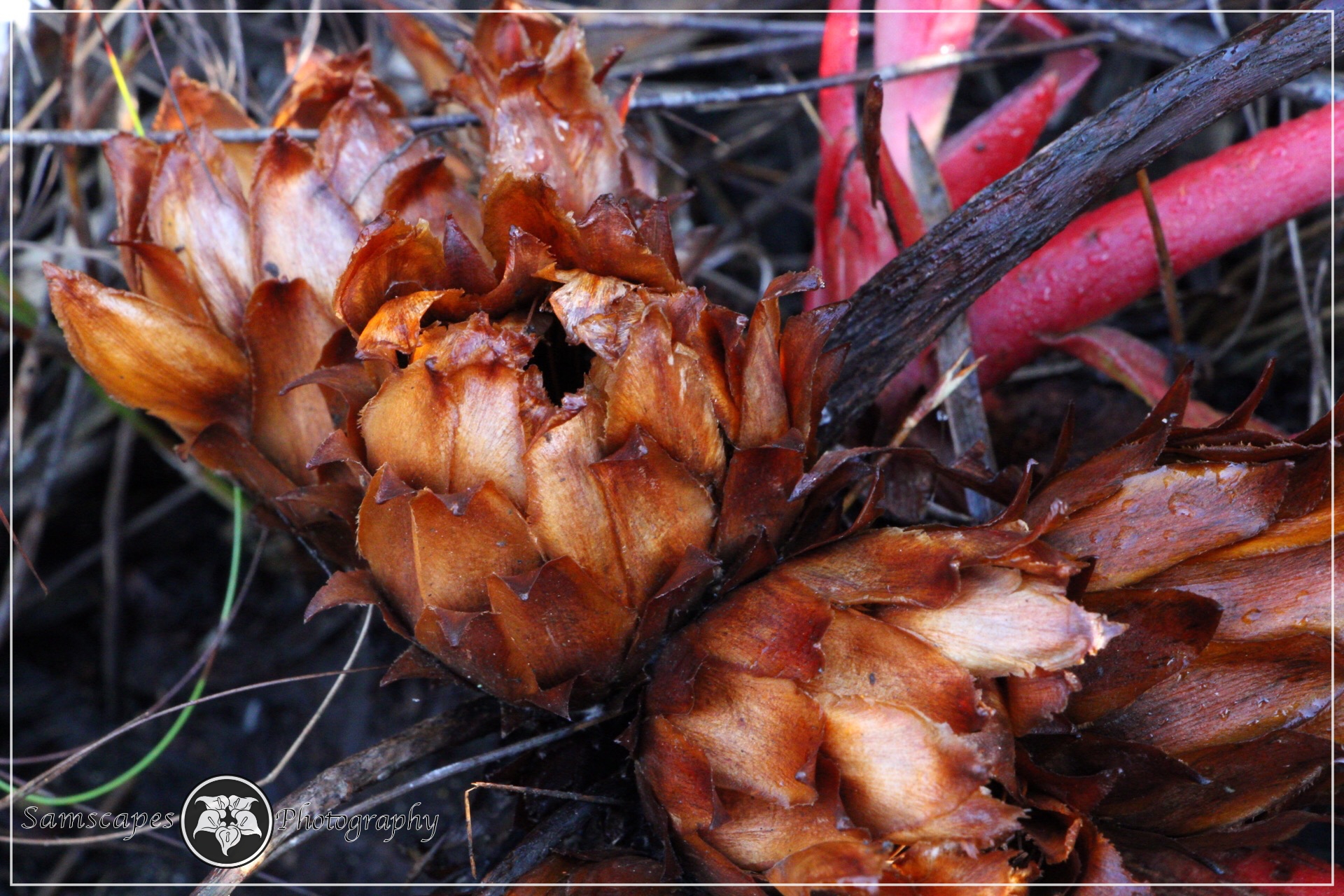
This heart-shaped leafed plant is an example of a ground flowering protea that exudes a yeasty smell and is pollinated by mice that feed on the flowers. This plant is destroyed by fire and the seeds which are contained in the fruits are usually released after a fire. These plants usually flower in June or July. The stems are red and hairless and the as well as the heart – shaped leaves.
See my post for where we saw these flowers on our hike in Fernkloof, https://samscapesphotography.co.za/fernkloof-nature-reserve-hike-with-paula/


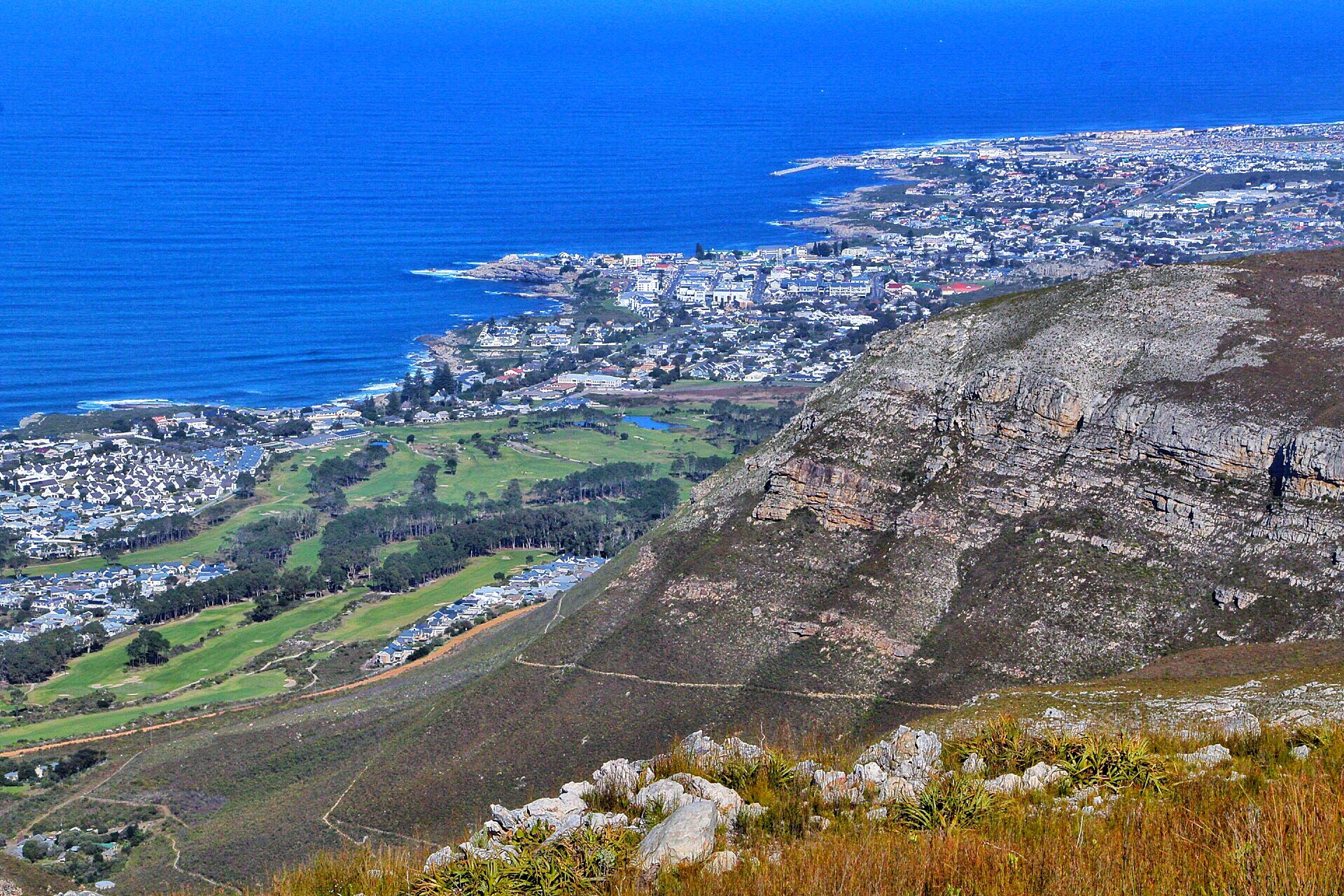
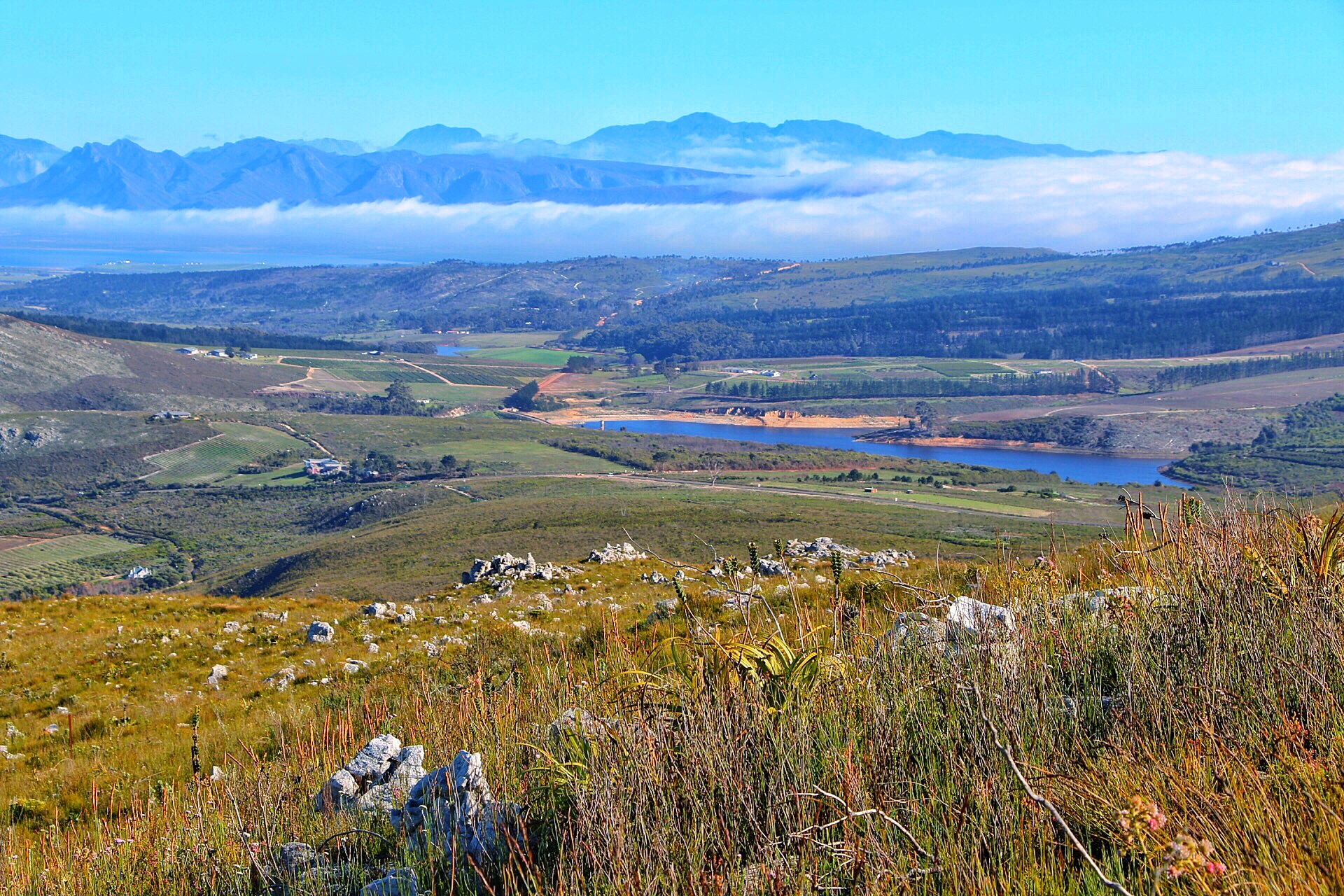
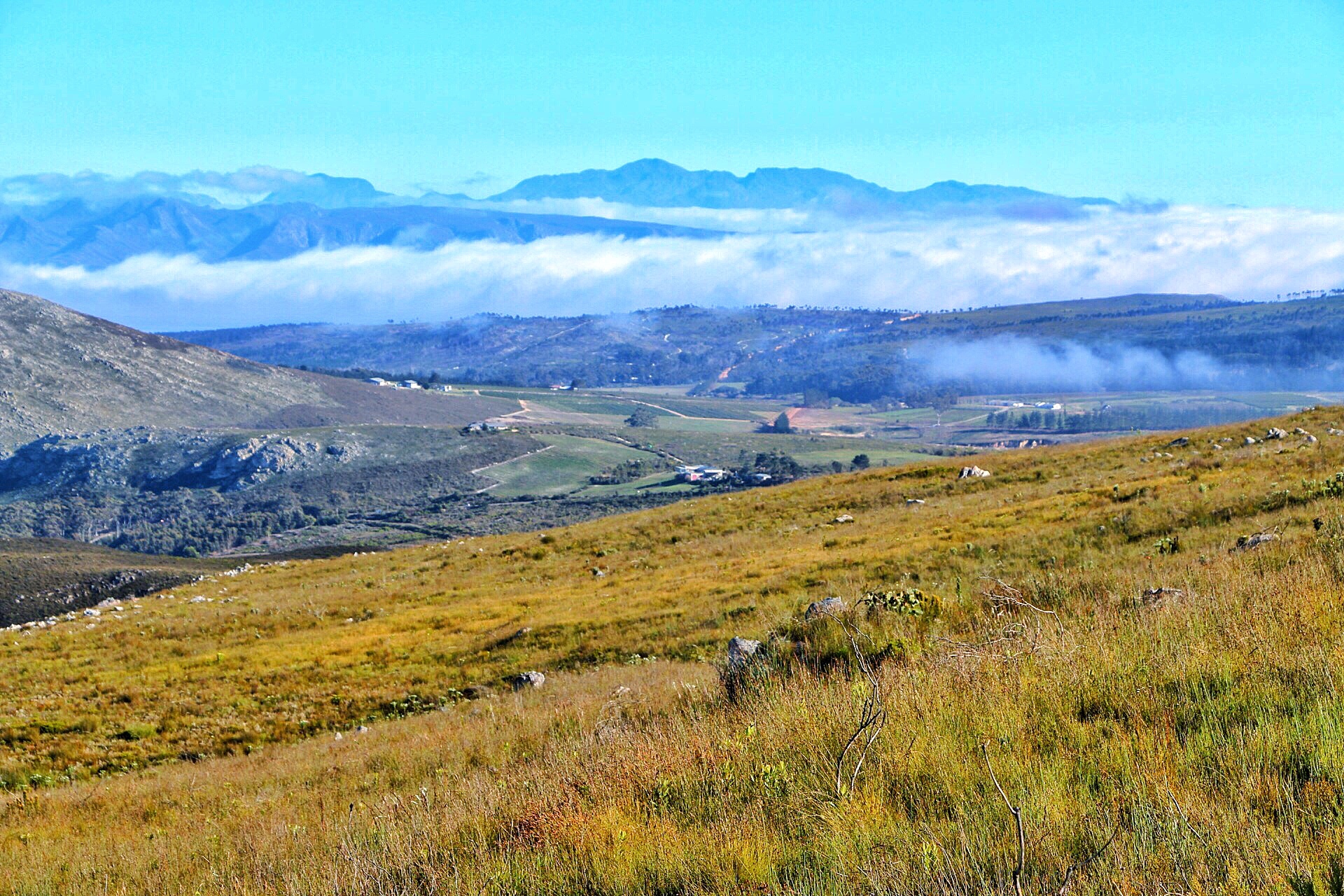
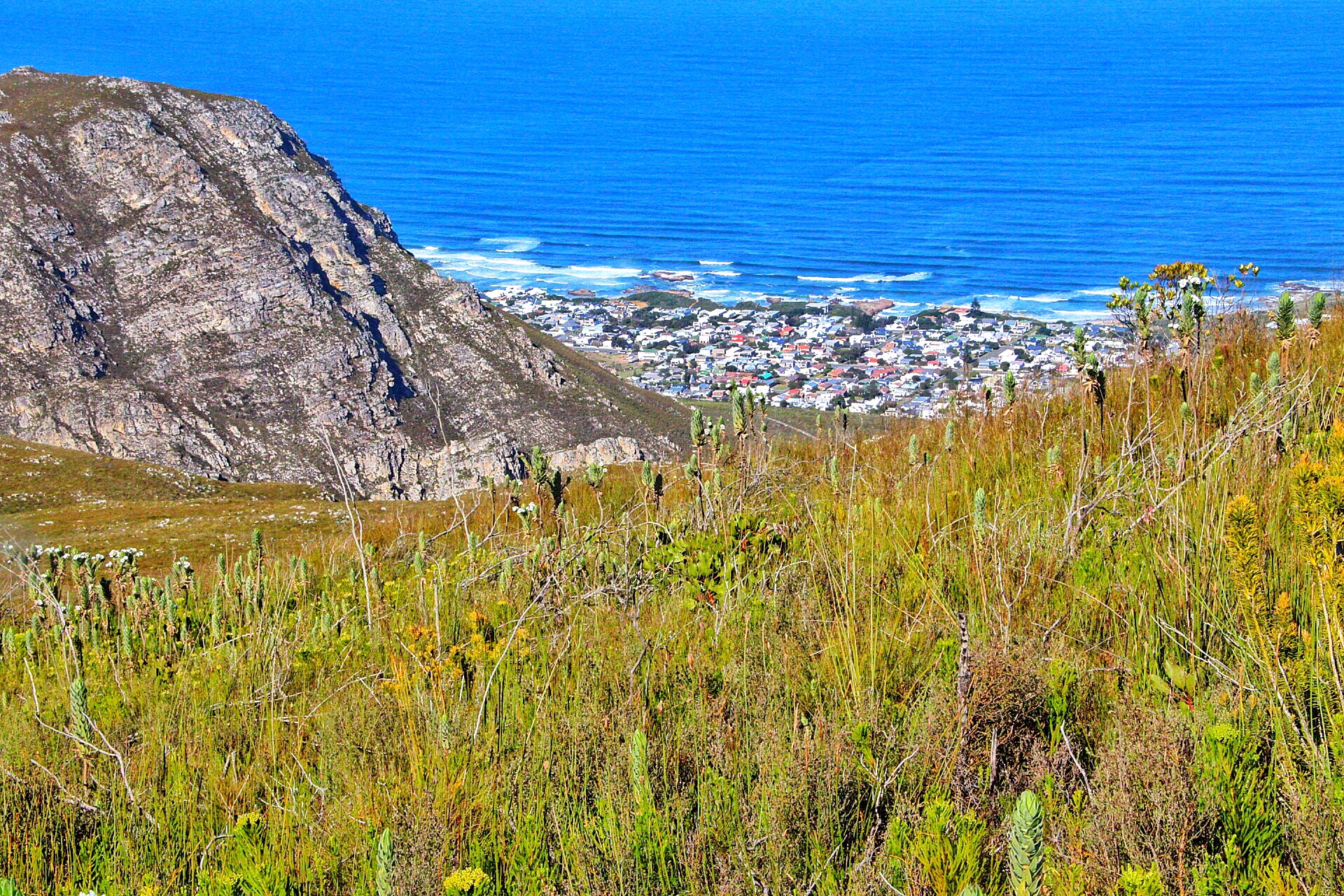
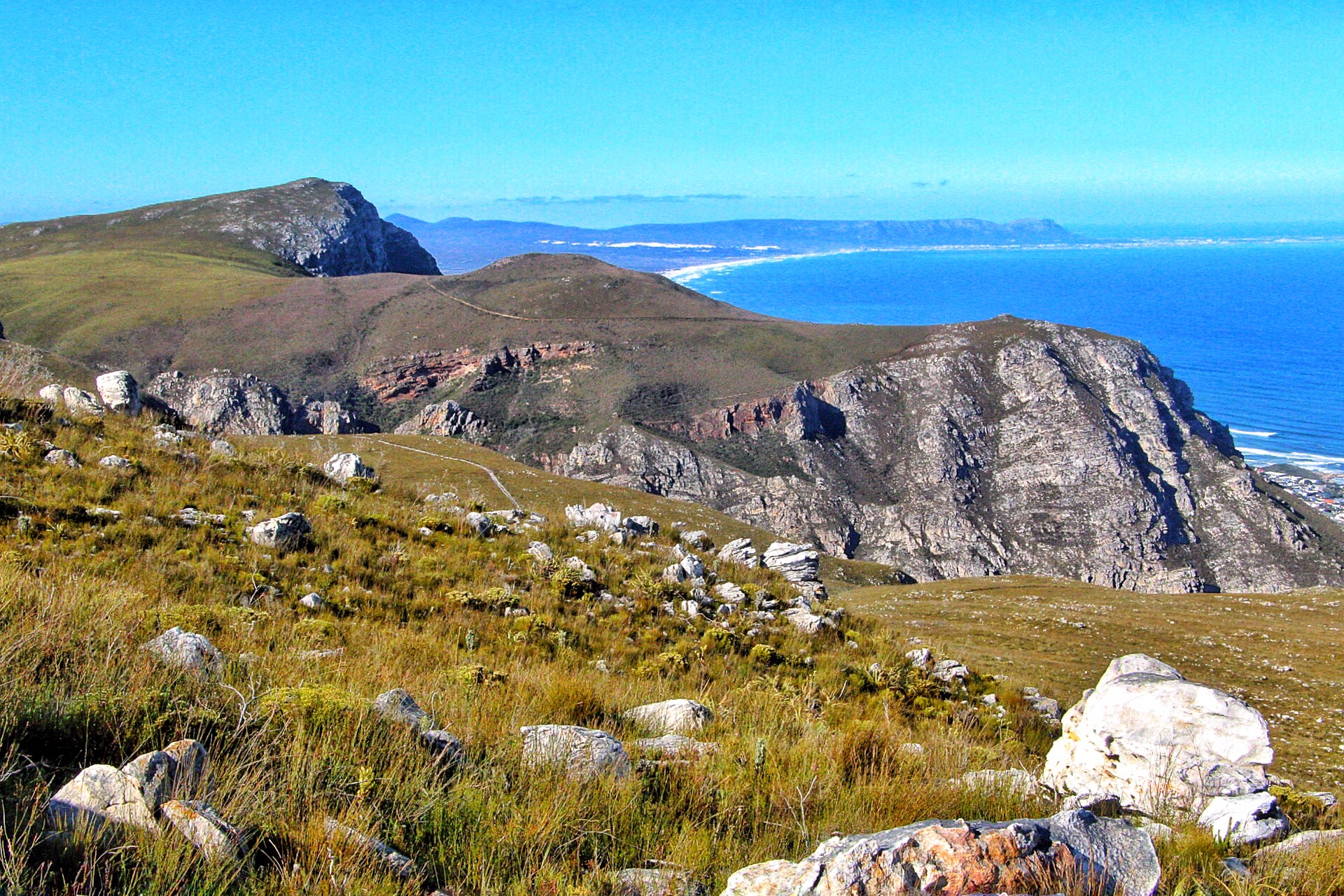
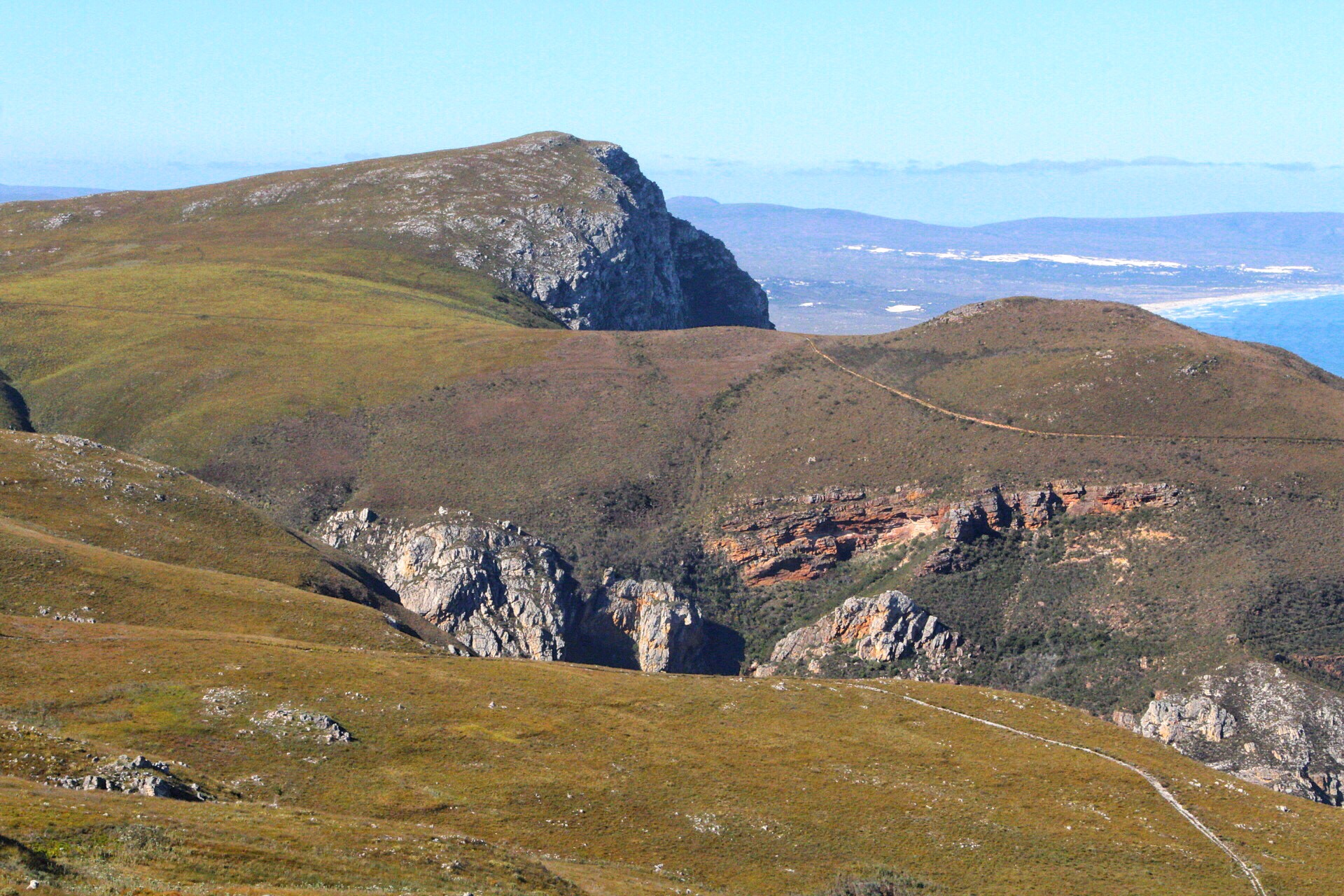
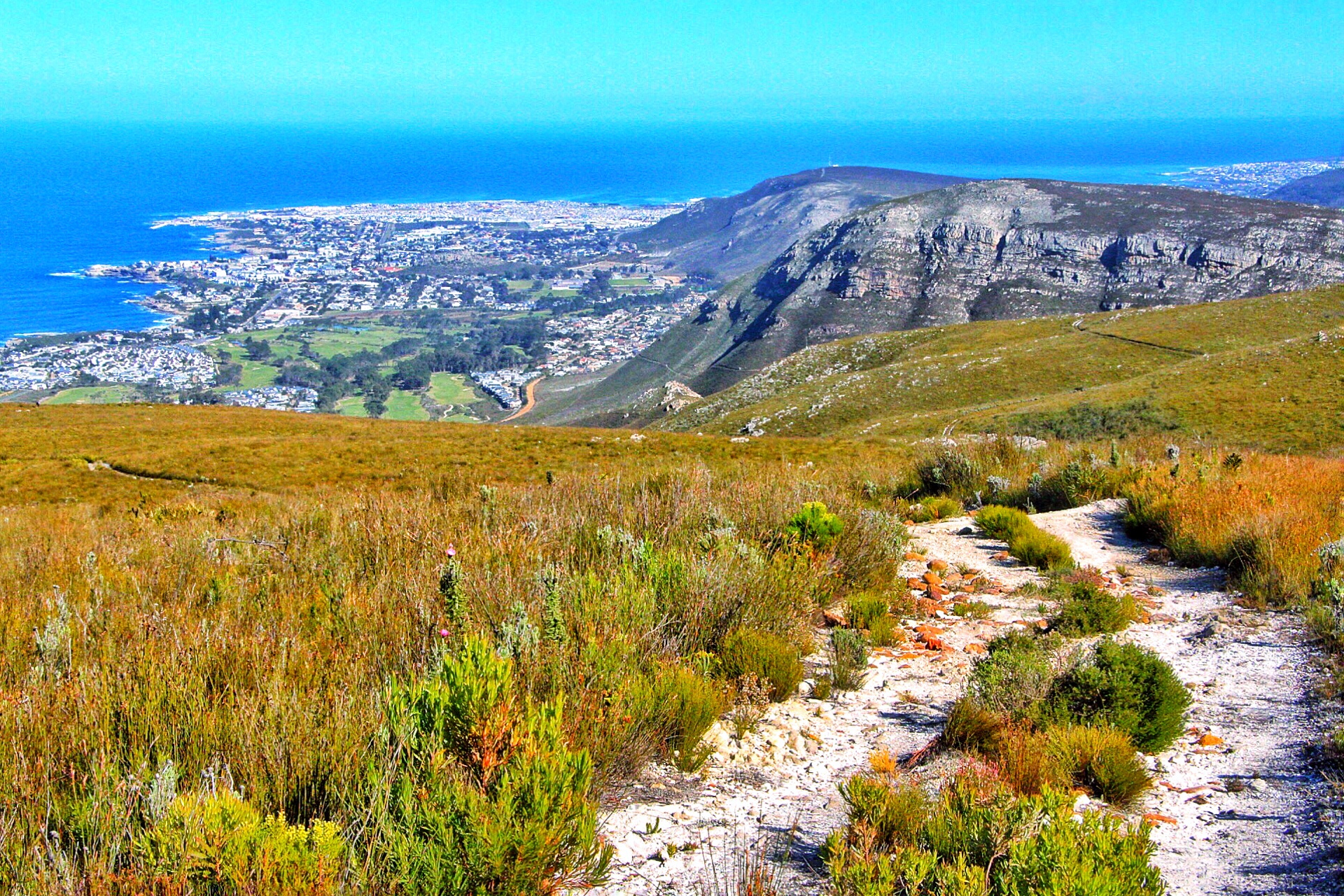
We climbed the Adder Ladder and walked the Galpin Path to White Rock. From White Rock we took the Galpin Front Path to the Pride of Hermanus Path which joins with the Jeep Track. We walked the Jeep Track and took the Shortcut Link Path to the Adder Ladder, and came down at the Visitors Center. All in total it was a 10.5 km hike.
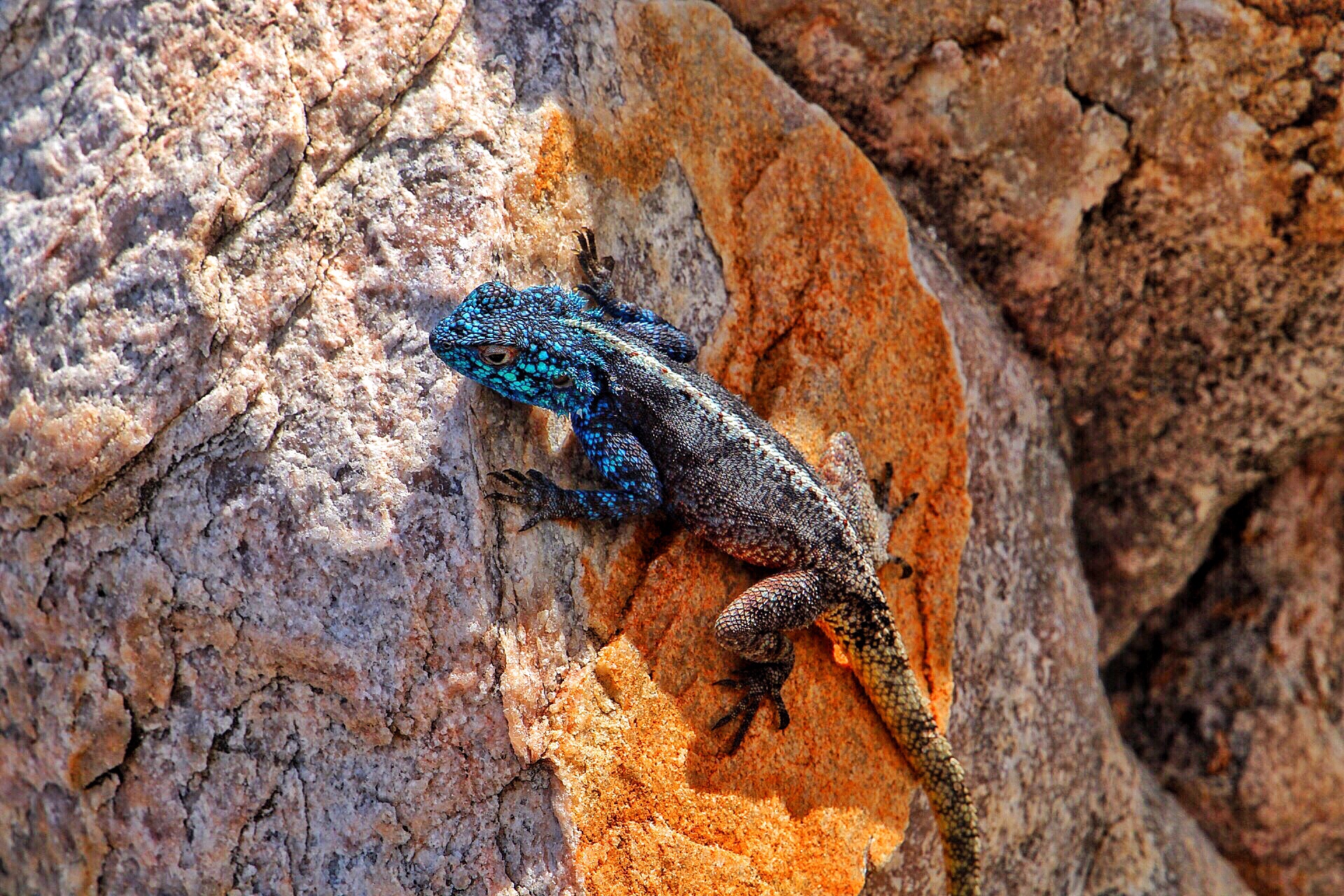
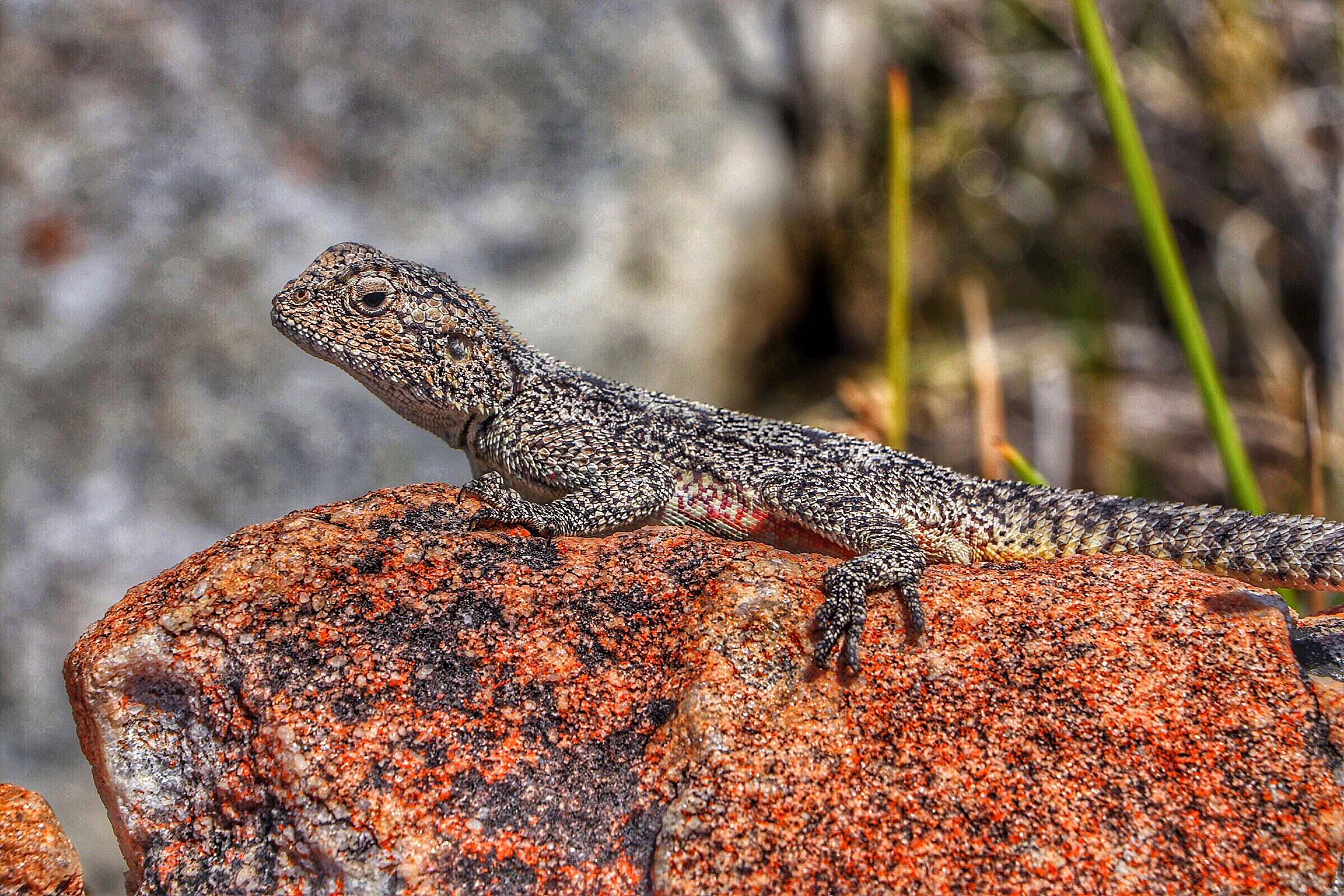
These sociable lizards are found in small colonies on rocky outcrops, and have excellent camouflage among the rocks. The males are noticeable for their bright blue heads during the mating season. These adaptable lizards are easy to miss as they have some ability to take on the colour of the environment, and can be near invisible when motionless. We sometimes have to look twice to make sure they are not twigs or branches. From the path of the coastal cliffs to the top of the mountain paths behind Hermanus, we have see all colour schemes. In newly burn areas you might see ash white and almost black in areas with lots of shadow (and everything in between). When a male in bright blue mating colours feels threatened is can “turn off” the blue in favour of a more neutral pattern till the threat is passed.
Caught this moment of a young lady speaking on her phone and dancing on Voëlklip Beach at sunset. Love the echo of the movement of her legs, captured in the photo. Also love the way she is reflected in the wet sand.

#dancer #dusk #sunset #voelklipbeach #beach #hermanuscliffpath #hermanus #sand #reflections #samscapesphotography