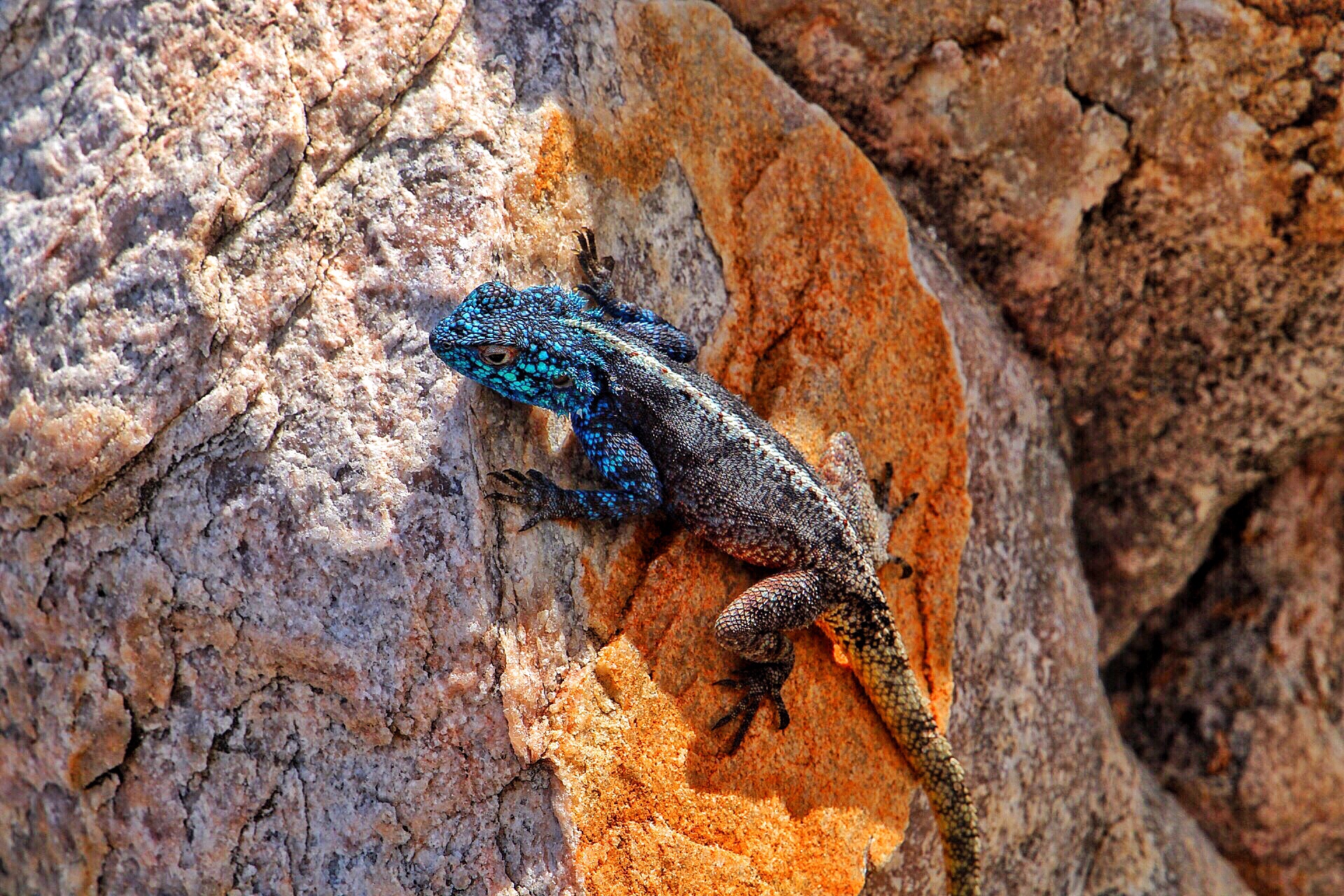
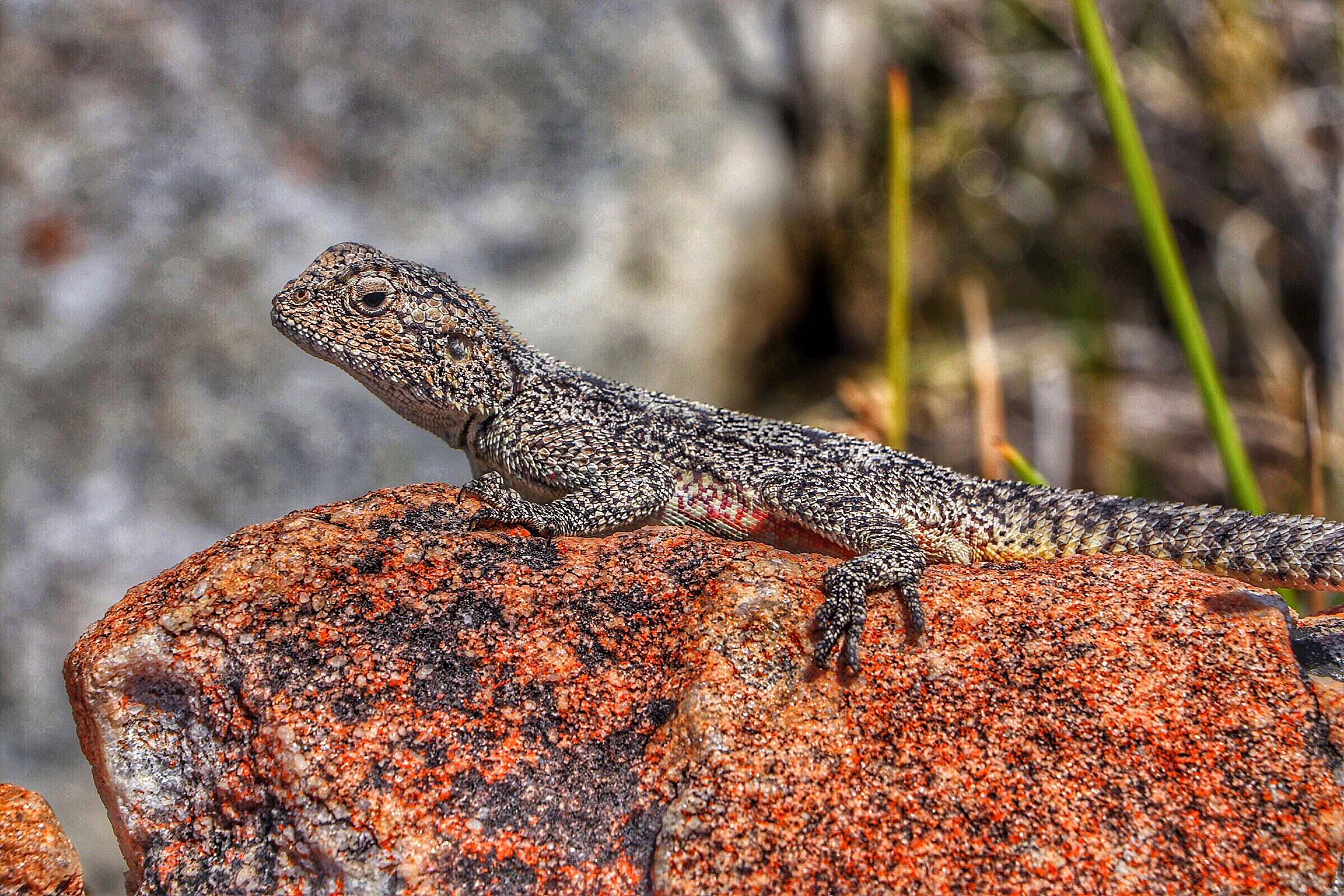
The Southern Rock Agama (Agama atra) is a lizard from the family Agamidea that can be found in Southern Africa, in Zambia, South Africa, Mozambique and Botswana. They live in colonies on rocky outcrops, and you can recognise the males by their bright blue heads.
These sociable lizards are found in small colonies on rocky outcrops, and have excellent camouflage among the rocks. The males are noticeable for their bright blue heads during the mating season. These adaptable lizards are easy to miss as they have some ability to take on the colour of the environment, and can be near invisible when motionless. We sometimes have to look twice to make sure they are not twigs or branches. From the path of the coastal cliffs to the top of the mountain paths behind Hermanus, we have see all colour schemes. In newly burn areas you might see ash white and almost black in areas with lots of shadow (and everything in between). When a male in bright blue mating colours feels threatened is can “turn off” the blue in favour of a more neutral pattern till the threat is passed.
Male Southern Rock Agama Lizard.Female Southern Rock Agama – check out that camouflage.
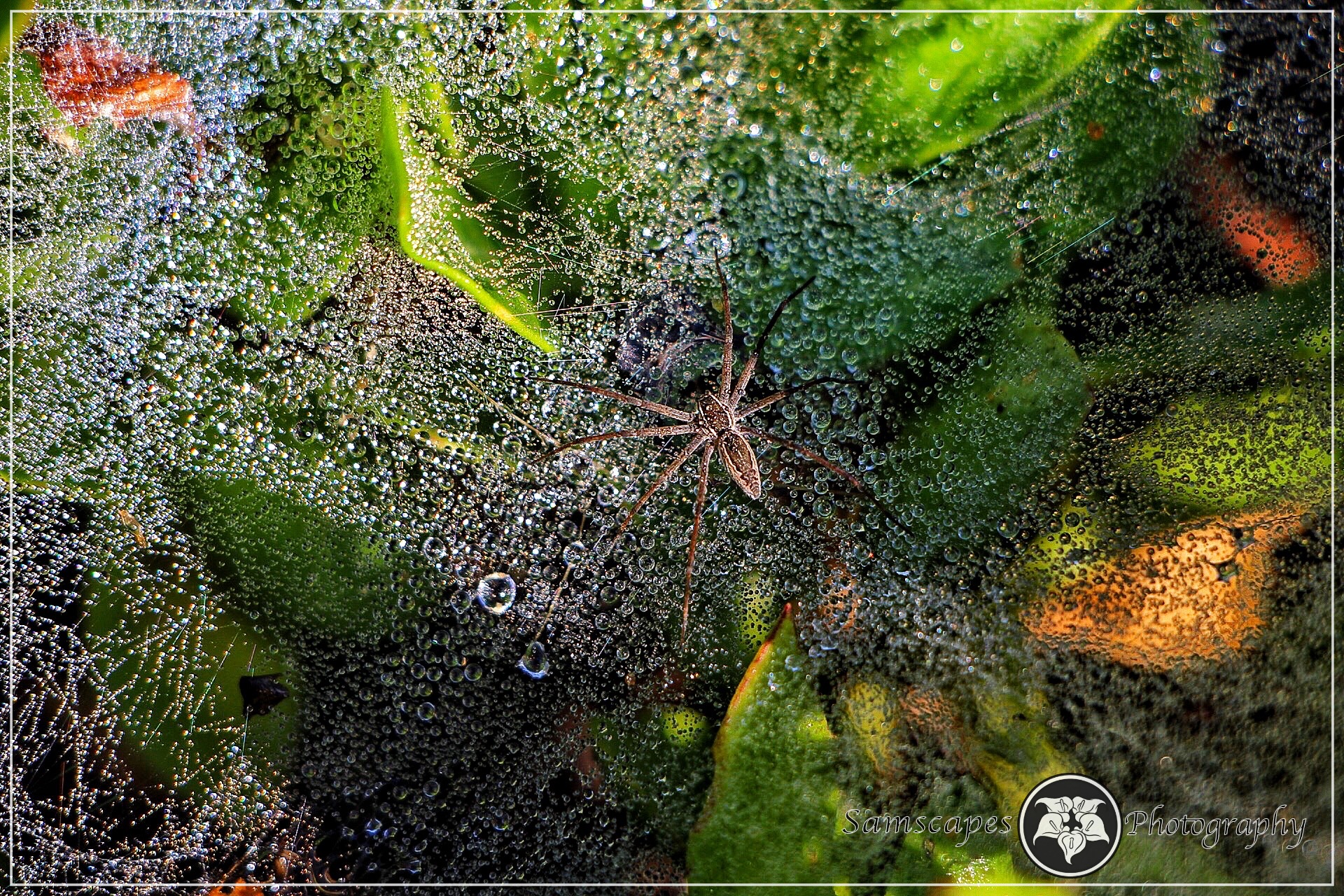
The Common Grass Spider – Agelenidae is a large family of spiders in the suborderAraneomorphae. Well known examples include the common grass spider, of the genus Agelenopsis. Most of these spiders are harmless to humans but the bite of theHobo Spider (Eratigena agrestis) has been known to cause necrotic lesions.
It started with an early morning walk while the dew was thick on the ground. We spotted some ground webs and when I came back with my camera I caught this shot of the sunlight on the dew droplets of the web as well as the spider patrolling the web. It took me a while to identify the spider.
Common Grass Spider, is a Funnel Weaver.
These spiders build a flat sheets of non sticky web with a funnel – shaped retreat to one side or in the middle, depending on the species. This is why the common name for the group is funnel weaver. However do not confuse these spiders with funnel web spiders from the mygalomorph family.
These spiders are from the fastest runners and their hunting strategy is to build a web in the open on either grass or scrubland. They wait for the arrival of their prey such as grasshoppers that fall onto the sheet web and even though it is not sticky it is full of entangling filaments that the spider keeps laying down while moving across the web. The filaments catch in the slightest projection of the preys body or legs. The web is also springy and the spider reacts to the slightest vibration in the web. Prey is set upon and given a venomous bite which paralyses it and whereby it is dragged to the lair and devoured. Males are less successful hunters than females.
These spiders are known to find spots in houses to nest, either inside or outside under window ledges. They are not pests nor do they eat pests. They are quite selective in their prey. They will return to their webs after nesting.
They are social spiders and build complex communal webs in Africa. Social activities include communal web building, co operating to capture prey and communal rearing of young .
Lazy Lob and Crazy Cobare weaving webs to wind me.
I am far more sweet than other meat,
but still they cannot find me!Excerpt from poem in The Hobbit by J.R.R Tolkien
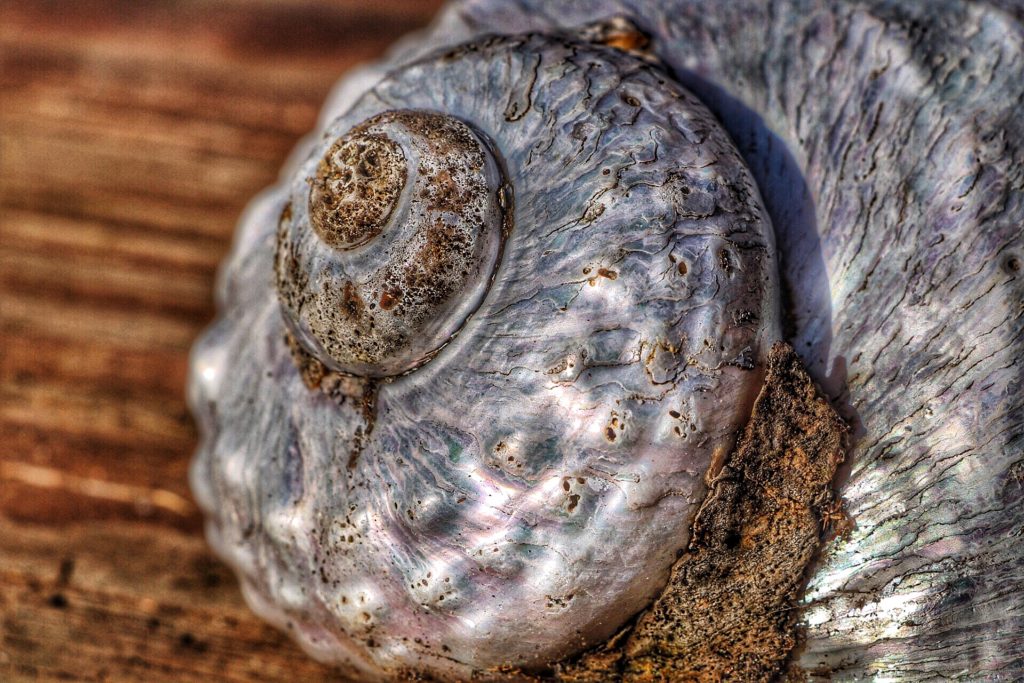
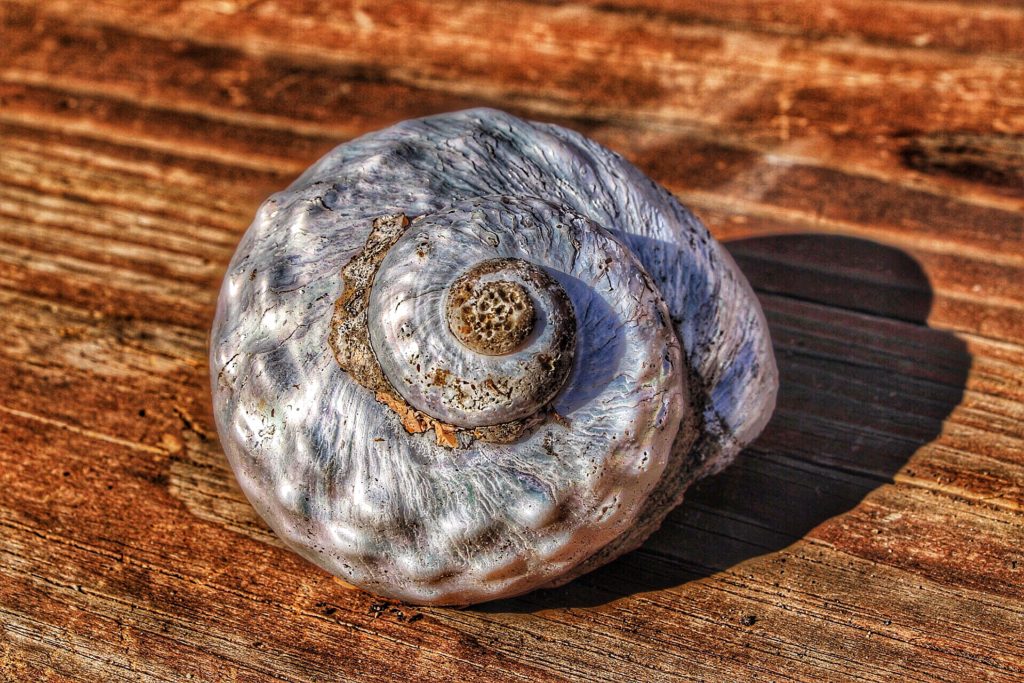
Giant Turbo Snail, Turban Snail, Giant Sea Snail, Arikreukel in our local language. This Gastropod is a mollusk with many names. In my home town of HERMANUS, we have streets and guest houses named after this Sea Snail.
Once plentiful, these beautiful shells are now harder to find. I remember my parents making a curry with the minced meat from the snails body when I was a teenager.
Many folks in my home town decorate their gardens with the shells, and this is a shell from my garden.Artisans clean the shells to the mother of pearl and use it for jewelry or keepsakes for tourists.
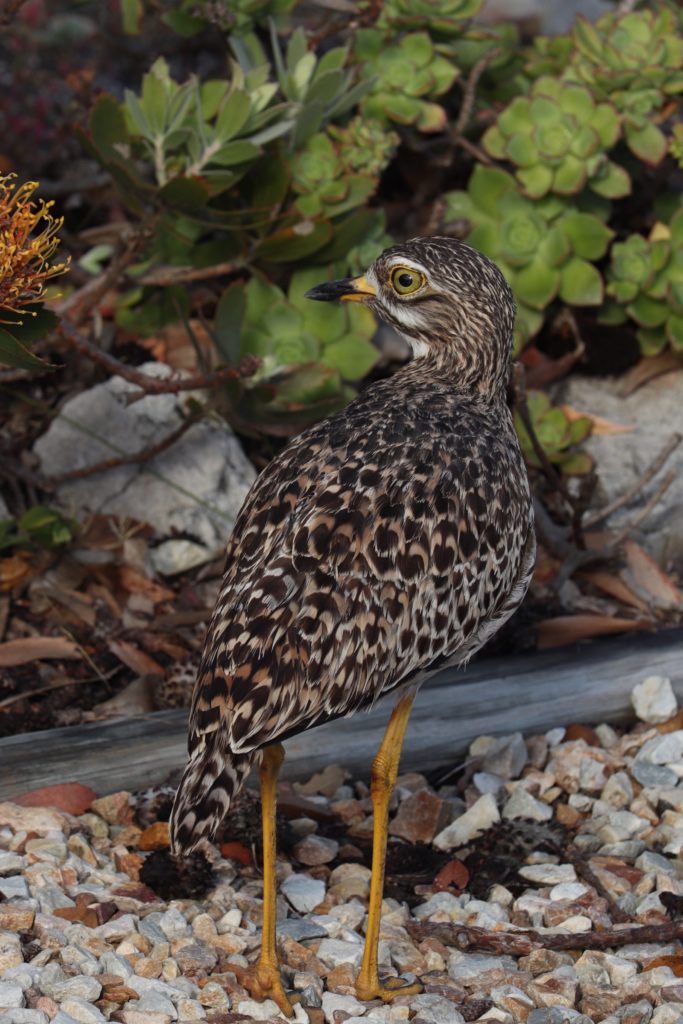
Behind our house in Kwaaiwater, Hermanus is a green belt that verges the Golf Course. On this stretch of land there is a fynbos garden. It is here that I came across a breeding pair of Speckled Thick Knee Birds. I was delighted to get these photo’s as I had the right lens on my camera at the time. All my previous attempts at a good photo had been in vain.
The spotted thick-knee, which can reach up to 45.5 cm in height, has long legs and brown-and-white speckled plumage which provides camouflage, making it difficult to spot the bird in the grasslands and savannas where it roams. Its head is large and round with a prominent yellow eye and a short, stout beak. When in flight or standing in a characteristic position with its wings raised, it shows a striking contrasting pattern. Its legs are long and yellow and the tibiotarsal joint is expanded, giving it the name “thick-knee”.